

One of the most important decisions you’ll make when integrating RFID technology into your business is deciding which type of RFID tag to use.
Be warned. Initial investigations may provoke a ‘wood for the trees’ moment. There is a huge variety of formats and technologies available, each with its own advantages and disadvantages. However, once you clearly define your organisational needs and investigate the options, you can confidently select the tags that match your specific use cases.
This guide will help you do just that. We’ll describe the various types of RFID tags and typical scenarios in which they are used. We’ve also included a checklist at the end to help you begin your decision-making process.
Finally, if you’re new to the subject of RFID and how it can help you improve product traceability and inventory control, read our introduction to RFID article and look at our RFID case studies in five different sectors.
What is an RFID tag?
An RFID tag is a small electronic device that stores information and can be read wirelessly by a special scanner. Like a barcode but smarter, it doesn't need direct line-of-sight to work. Common examples include inventory tracking tags in logistics, asset tracking tags for equipment monitoring and library book tags. To see how tags play an integral part in a complete RFID setup, read our introductory RFID article.
Passive, active and semi-passive tags
One of the key decisions you’ll make is whether to choose passive, active or semi-passive tags.
Passive tags have no battery and are powered by the reader's radio waves. They're cheap but have a limited range (centimetres to a few metres). They are commonly used in logistics, supply chain management, inventory tracking and retail applications where cost-effectiveness is crucial.
Active tags contain their own battery, enabling longer read ranges (up to 100+ metres) and additional features like sensors, but they're more expensive. Use cases include tracking expensive or high value equipment such as wheelchairs and IV pumps in hospitals, and vehicles, shipping containers or pallets in defence or logistics operations.
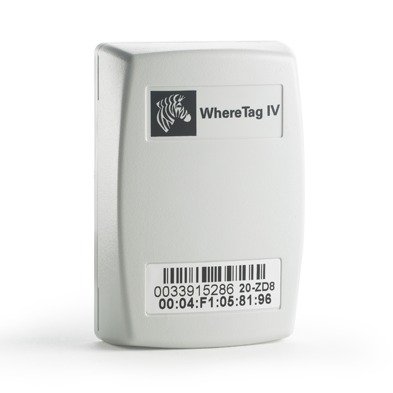
Semi-passive tags have a battery to power the chip but still rely on the reader's signal for communication. They offer a middle ground, with a better range than passive but a lower cost than active. Applications include transporting temperature-sensitive medications, where the battery powers the temperature sensor to continuously log data during transport and storage, but the tag only transmits this logged data when scanned by RFID readers.
Other types of RFID tag
RTLS (real-time location systems), incorporating RFID technology, provide a map view of items. The tech uses multiple RFID readers to triangulate tag positions in real-time, providing continuous location tracking with a one-to-three metre accuracy. Use cases include monitoring forklift locations and movement patterns in distribution centres, and monitoring construction equipment across large sites.
NFC (near field communication) is a short-range RFID subset requiring close contact (4cm). It enables two-way communication and secure transactions between devices, for instance smartphones. A common use case is contactless payment.
To sum up the difference between conventional RFID and these subsets of the technology:
- RFID is for item identification.
- RTLS adds real-time positioning, often incorporating RFID (and sometimes other technologies).
- NFC is for secure short-range interactions and data exchange.
Choosing the right frequency
As well as deciding from the above, you will also need to choose an RFID frequency. Here are the options:
- Low frequency (125-134 kHz): very short range and good for access control.
- High frequency (13.56 MHz): short range and used in many contactless payment systems.
- Ultra-high frequency (860-960 MHz): longer range and commonly used to track items.
- Microwave (most commonly at frequencies above 3 GHz): longer range and often used in toll road systems to track passes, and similar.
Passive or active, low or high frequency – which should you choose?
Already, you’ll see there are quite a few decisions to make – even before we look at further factors below. Here are a few points to bear in mind in relation to what we’ve looked at so far.
- Passive and active tag read-range is partly determined by frequency, but active tags have capabilities for far longer read ranges.
- Passive tags are much cheaper than active tags – where the former may cost pennies or fractions of a penny, the latter can cost in excess of £100 per tag. For that reason, active tags are typically used for high-value items or items with highly regulated supply chains.
- UHF passive is considered the sweet spot for many commercial applications due to its combination of decent range, low cost and no battery requirements.

Next, we’ll look at tags for challenging environments, form factors and several other considerations.
Rugged tags for challenging environments
As we illustrated in our introduction to RFID article, Walmart is considered the poster child of RFID integration: it has mandated that many suppliers use the technology to fit in with its overall vision for RFID-powered inventory tracking. However, it didn’t always get its approach right in its earlier RFID adoption and encountered poor tag read rates. This was partly due to interference from metals and liquids.
Take note: you must ensure the types of RFID tags you choose will perform in your specific environment. Here are some common solutions.
Metal mount tags
These use innovative data antenna technology to overcome metal interference, a common problem that can obstruct tag performance, as Walmart discovered. Typically, they are available in stainless steel, ceramic and plastic. These tags are thicker than standard, so can’t be generated from a standard printer. However, with the right tech, such as Zebra’s ZT411 RFID On-Metal Tagging Solution, they are easy enough to print on site.
Temperature-resistant tags
Heavy industry and outdoor environments frequently require extreme temperature tolerance. High-temperature range tags are capable of operating at 200°C or higher; low-temperature applications function as low as -190°C.
Water- and chemical-resistant tags
You can choose tags designed to withstand strong acids, bases and industrial chemicals. Some tags can also be submerged or handle high-pressure hosing: look out for ingress protection (IP) ratings of IP65, IP66 and IP69K for protection against water jets. And if you are dealing with challenging environments, you might like to read our guide to rugged devices, which unpacks many concepts around tough technology.
Tamper-evident and security tags
Vehicle windshield tags, container seals, high-value asset protection and pharmaceutical anti-counterfeiting may all require tamper-resistant elements for security. Available tags range from tamper-evident (shows interference) to tamper-resistant (prevents access) and tamper-proof (high-security prevention).
Form factors
Form factors determine how and where your tag can be physically deployed and attached. There are several things to consider.
Size and profile
Tags range from coin-sized discs to credit card formats, with profiles varying from ultra-thin labels to robust housings several centimetres thick for industrial applications.
Mounting options
Choose adhesive backing for permanent installation, clip-on designs for removable applications and bolt-through holes for secure mounting. You can even select embedded options that integrate directly into products during manufacturing.
Application-specific designs
Purpose-built shapes include wristbands for access control, laundry-compatible tags for textile tracking and tyre tags with specialised rubber compounds designed to withstand the extreme conditions inside vehicle tyres.

Memory: what information can a tag hold?
Tags can hold more than a basic unique ID. In fact, some contain detailed information about product traceability, lot or batch numbers, production dates and expiration dates.
It’s worth looking at how memory on a tag works, to help understand the use cases for different types of RFID tags and what will suit your organisation.
RFID tags typically have up to three memory banks, with capacity ranging from 64 bits to one kilobyte.
- TID (tag identifier) is a tag serial number that identifies the physical tag itself and is unchangeable.
- EPC (electronic product code) is a global identification standard to uniquely identify a tagged product and catalogue what product the tag represents – for instance, ‘this particular item’. It is programmable.
- User memory stores details like expiration dates, batch numbers or service history.
Read-only tags store fixed data only. These will typically have the TID and possibly the EPC component, but are unlikely to feature user memory since there is no need for changeable application data. They are commonly used for basic asset tracking, library book IDs and pet implant IDs.
Read/write tags have rewritable memory and will include TID, EPC and user memory to allow data to be modified or updated. They are useful when information about a product changes over time.
However, even in the case of read/write tags, many applications use simple ID numbers and link back to external databases, rather than storing complex data directly onto tags.
Standards, regulations and security
In terms of broadcast regulations, RFID operations are licence-exempt in the 865-868MHz band under Ofcom rules. For devices that contain a battery and are radio-enabled, you must also comply with the Radio Equipment Directive (RED).
Industry standards will vary from sector to sector. Common standards associated with RFID include GS1, which applies to healthcare and retail among others; and the ISO/IEX 18000 series for air interface communication, which will apply to many industries including logistics, retail, transport and manufacturing. If your company distributes internationally, it’s extremely important to ensure you comply with global standards.
Data protection is a trickier matter. While GDPR is not specifically targeted at RFID usage, it is generally agreed among industry and legal experts that where it processes personal data in any form it should comply with GDPR regulations. Therefore, privacy and information security should be built into your tags and wider RFID applications.
In any case, tight security should be a given, whether or not you are complying with GDPR. RFID systems face risks from eavesdropping, cloning, spoofing and unauthorised access.
Follow these general principles:
- Store only basic ID numbers on tags, not sensitive information.
- Encrypt data so hackers can't read it. Use physical protection like tamper-proof seals.
- Consider signal-blocking wallets or pouches when tags are not in use.
Nuffield Technologies can help advise you on all standards, compliance and security concerns to ensure your tags are fit for local and international markets and protect your data.
Bringing it all together: which type of RFID tag?
You’ll now have a good sense of what makes up an RFID tag, and the many varieties available. Use the checklist below to refine your decision-making, so you can find the right solution for your business.
- What's your budget per tag? Passive tags cost pennies; active tags can exceed £100.
- What read range do you need? Centimetres (LF), few metres (HF) or 100+ metres?
- Will tags encounter metal? If so, you'll need specialised metal-mount tags.
- What environmental challenges exist? Consider temperature extremes, chemicals and water, and select appropriately.
- How will tags be mounted? Adhesive, clip-on, bolt-through, embedded or application-specific shapes (wristbands, tyre tags)?
- What data storage do you need? Basic ID only (read-only) or changing information like expiration dates (read/write)?
- Are you working in a regulated environment? Healthcare, pharmaceuticals, or high-security applications may require specific compliance.
- Do you need global compatibility? Ensure tags meet international standards (ISO, EPC) for worldwide operations.
- What security level is required? Do you require data encryption, or even tamper-evidence tags?
- How will tags integrate with existing systems? Consider printer compatibility for metal-mount tags and database architecture.
Nuffield Technologies is an RFID solutions provider helping organisations implement and manage cost-saving RFID technologies. We provide consultancy to help you assess your needs, and preferential rates on RFID hardware and software via our partner Zebra Technologies. We also offer ongoing support to troubleshoot any issues and ensure your RFID technology runs smoothly and brings maximum benefits to your organisation.